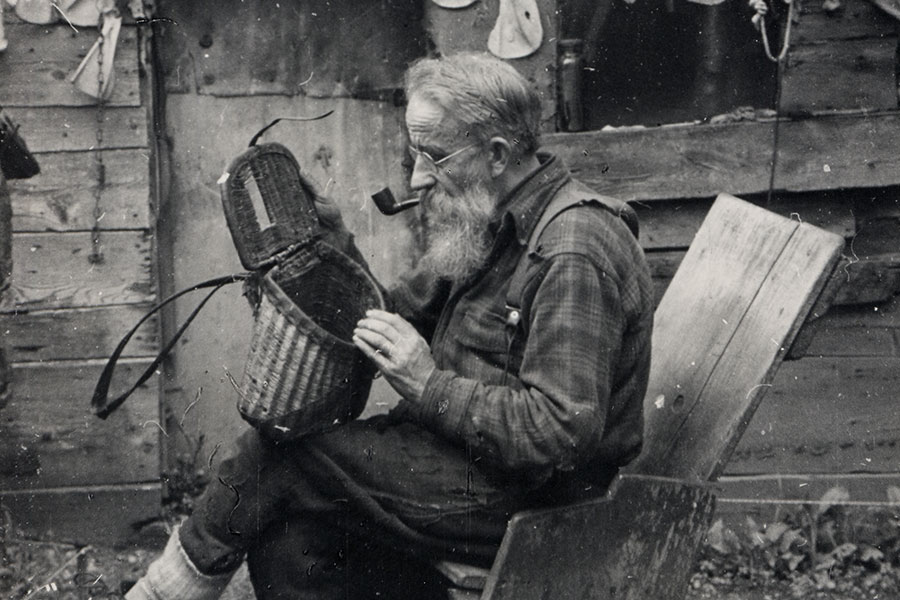
It wasn’t a very polite question to ask an older gentleman—one of the last of the Adirondack lumber-camp generation—who’d invited me into his home for an oral-history project. But it was a question that had been on my mind for years: “What about prostitutes?”
More Articles From Niki Kourofsky
To the Mountain
My hometown of Morrisonville, on the Saranac River, is a five-minute ride away from the stores and fast-food joints of Plattsburgh. But follow the river west and those same five minutes bring you to the brink of the vast Adirondack Park.
Polar Opposites
It’s the best kind of countdown, heading southwest on Route 28: Eighth Lake … Seventh Lake … Sixth Lake … Fifth Lake, then BAM! Inlet’s tiny downtown explodes in a funfetti of color and movement.
Back to Basics
That daydream of leaving it all behind and starting a cabin colony deep in the woods? Bowen and Julie Morris have made it their reality.
A Who’s Who of Adirondack Hermits
In 1852, a group of surveyors surprised an old man living in a crude shelter near Herkimer County’s Ice Cave Mountain. He ran off so quickly that they didn’t see much more than a flash of the red patch on the bottom of his drawers. Ever heard of “Old Patch”? No?
Bungtown or Bust
I’m a nerd for history. I like the hard-won view from a mountaintop as much as the next guy, or a good wander through a winter wilderness. But for me the clean smell of frost or the crunch of snow under my boots can’t compete with the musty perfume of a library and the scritchity flip of a yellowed page.
The Ganzi
I’m a sucker for noodles. And handmade noodles? Piled in a rich oyster-mushroom broth? Yes, please. That’s what’s for lunch today—along with a salad of local greens and feta, a braised pork belly from Vermontville’s Kate Mountain Farm, and a scrumptiously sticky maple-syrup cake—at The Ganzi, Paul Smith’s College’s student-run restaurant.
Great Pines
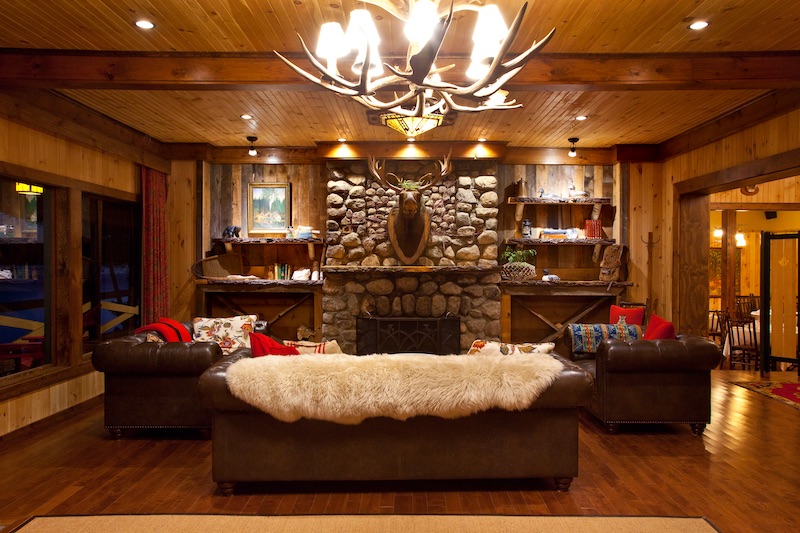
This 14-acre spread perched on Fourth Lake between Old Forge and Inlet has been welcoming guests since 1896—first as Camp Onondaga, then as various iterations of the North Woods Inn. It had been well loved and well worn by the time Britta and Devlin Hennessy, along with their partner Keir Weimer, bought it in 2015.
The Legend of Hawkeye
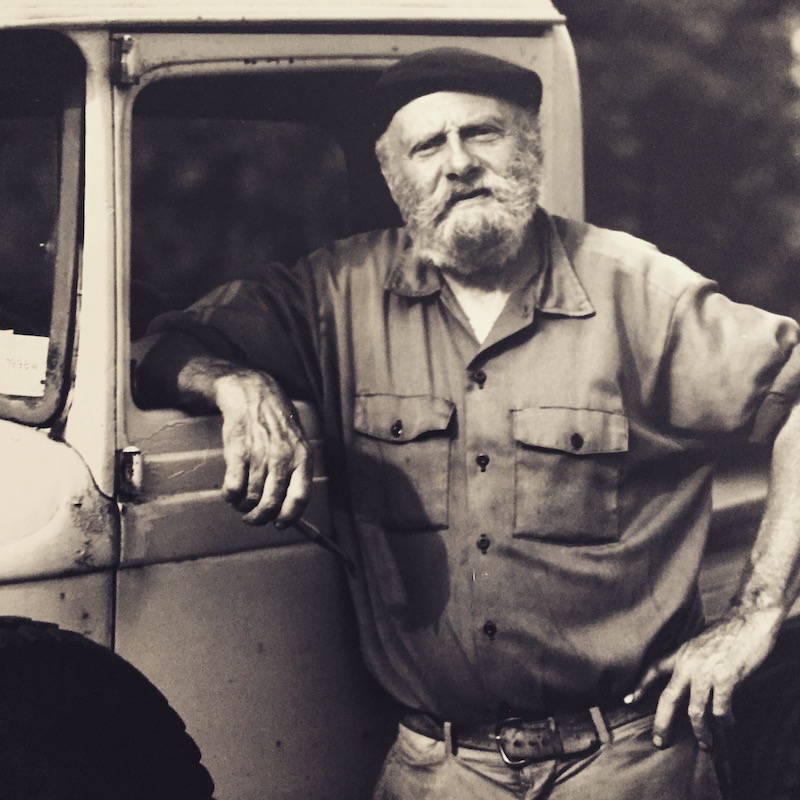
Once, not so long ago, a gearhead paradise lay hidden along the stretch of Route 86 near Donnelly’s ice-cream stand. There, at a weathered farmstead, John “Hawkeye” Hawkinson spent a lifetime unearthing and rehabbing mechanical treasures. If you were lucky, you might find him outside, feeding his wild friends or holding court in a wicker chair. And if he was amenable, he might tell you a tale or show off his jaw-dropping vintage car and boat collection.
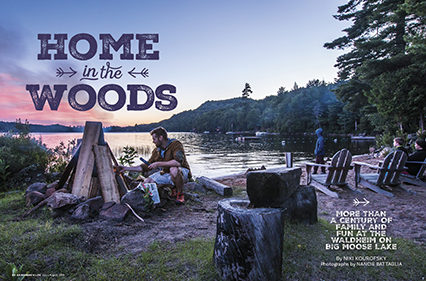
Home in the Woods
Big Moose Lake was nowhere near the path of totality for the Great American Eclipse. But the group that gathered at the Waldheim during 2017’s touchstone event surely wouldn’t have traded places with any of the milling crowds trailing from Oregon to South Carolina. They had their own natural wonder to enjoy: a sparkly August day with just the wisp of a breeze from an Adirondack lake. There was no ignoring the phenomenon that fascinated a nation, but this bunch opted to pass homemade devices from hand to hand rather than swap Instagram images in cyberspace. Along with a pair of those worth-their-weight-in-gold cardboard shades, they traded a soot-smeared piece of glass, a colander and—the crowd favorite—a Frosted Flakes cereal box conscripted as an indirect viewing contraption. It was the kind of low-tech, high-companionship moment that perfectly fits the spirit of this place.
Big Day Out
It’s July 5th—the marching bands have faded, the fireworks have fizzled and the potato salad has finally gone south. What’s left to do?
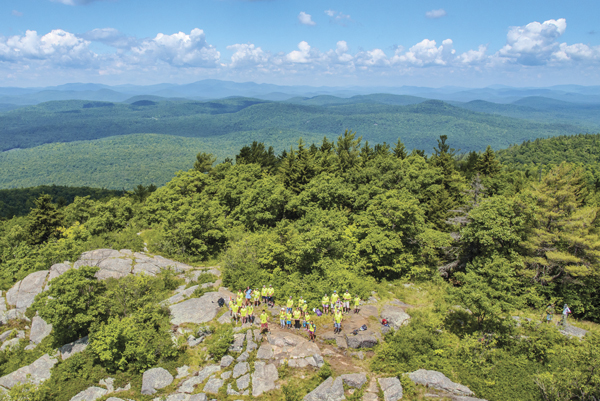
One of the best bets to keep the party going is the Lake George Land Conservancy (LGLC) Hike-A-Thon, which kicks off the morning after every Independence Day. It’s a parade of treks and paddles designed to introduce—or reacquaint—the public with all the adventures awaiting in the natural world.
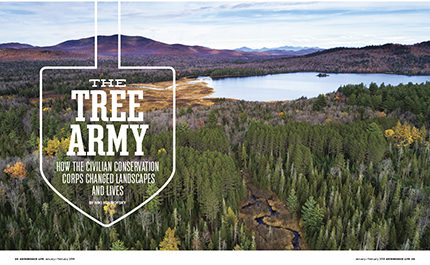
The Tree Army
“You know, it’s kind of a big deal.”
A few years ago, my youngest daughter—around eight at the time—paused for about a nanosecond in her bouncing-off-the-walls excitement over an upcoming trip to deliver that earnest assessment of camping.
We’re not a family of hardcore backcountry adventurers, but a couple times each summer we’ll pitch a tent at a state campground and spend the weekend falling asleep to the chirrups of crickets and waking to the yodels of loons. Those public campgrounds are my daughter’s portal into the wilds, and her experiences there—running feral with her cousins, paddling a misty morning lake, catching an unexpected meteor shower—will inform her relationship with nature for the rest of her life.
The Adirondacks is rich in these wilderness gateways thanks, in part, to an initiative born of desperation: the Emergency Conservation Work Act, more commonly known as the Civilian Conservation Corps (CCC).
Latest Articles
Follow Us
Advertise in our November December 2026 Issue
Learn about advertising opportunities in Adirondack Life Magazine.