“You know, it’s kind of a big deal.”
A few years ago, my youngest daughter—around eight at the time—paused for about a nanosecond in her bouncing-off-the-walls excitement over an upcoming trip to deliver that earnest assessment of camping.
We’re not a family of hardcore backcountry adventurers, but a couple times each summer we’ll pitch a tent at a state campground and spend the weekend falling asleep to the chirrups of crickets and waking to the yodels of loons. Those public campgrounds are my daughter’s portal into the wilds, and her experiences there—running feral with her cousins, paddling a misty morning lake, catching an unexpected meteor shower—will inform her relationship with nature for the rest of her life.
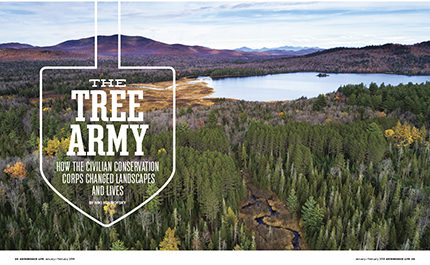
The Adirondacks is rich in these wilderness gateways thanks, in part, to an initiative born of desperation: the Emergency Conservation Work Act, more commonly known as the Civilian Conservation Corps (CCC).