In October 1926, a fire erupted in the harness room of George Gladd’s Whallonsburg general store. Within minutes the flames jumped to Ralph Lobdell’s gristmill next door
Whitcomb’s Garage Revs Up Whallonsburg’s Arts Scene
read more...


In October 1926, a fire erupted in the harness room of George Gladd’s Whallonsburg general store. Within minutes the flames jumped to Ralph Lobdell’s gristmill next door

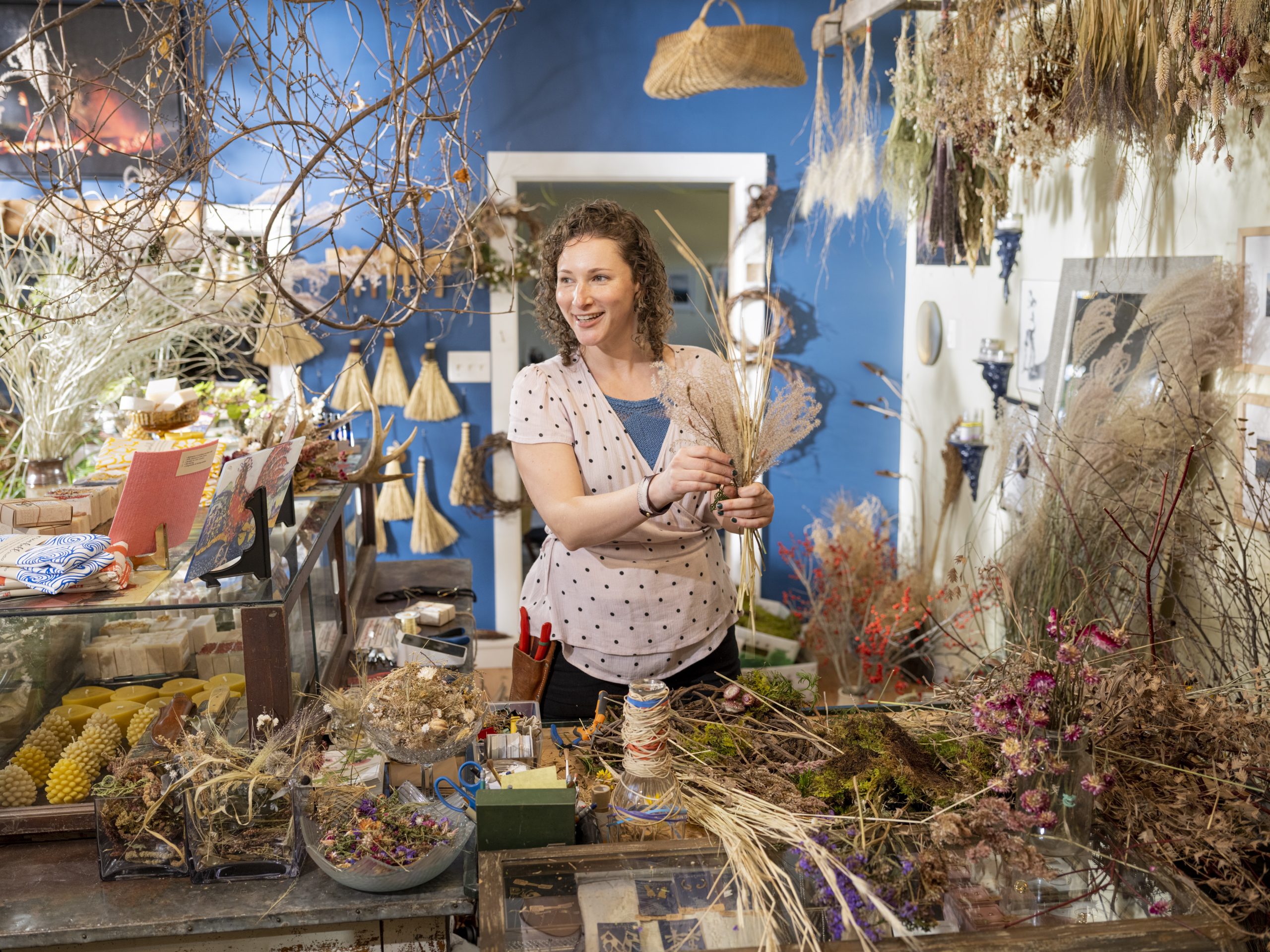
“Oh my gawd, how am I going to tell my friends?” says Marissa Jonke, impersonating her mother’s Queens accent when Jonke broke the news that she was becoming a taxidermist. “They’re going to say, ‘What, is she a serial killer?’”

Martha Corscaden is not an artist, and she certainly never imagined herself as a gallery proprietor back in 1971, when her older sister Vryling “Vry” Roussin came to their mother’s Keene Valley home on a break from the Maryland Institute College of Art.

In a picturesque corner of Upper Jay pasture, amid the languorous grazing of Sugar House Creamery’s brown Swiss cows, Bianca Braman is raising a more industrious kind of livestock.

Reviled as a “degenerate” by the Nazis, celebrated by the Paris art world and investigated for suspected Communist ties by the FBI, Marc Chagall prompted little more than bemused shrugs from the townspeople of Cranberry Lake in the summer of 1944.

If snuggling with your sweetheart by a crackling fireplace after a day of cavorting in the snow sounds like just your cup of cocoa, the Adirondacks can make your Rom-Com daydreams come true.

“Artists don’t retire,” says Jean-Jacques Duval, sitting in his Willsboro studio in front of an unfinished abstract painting on an easel. Another work in progress leans against a wall.
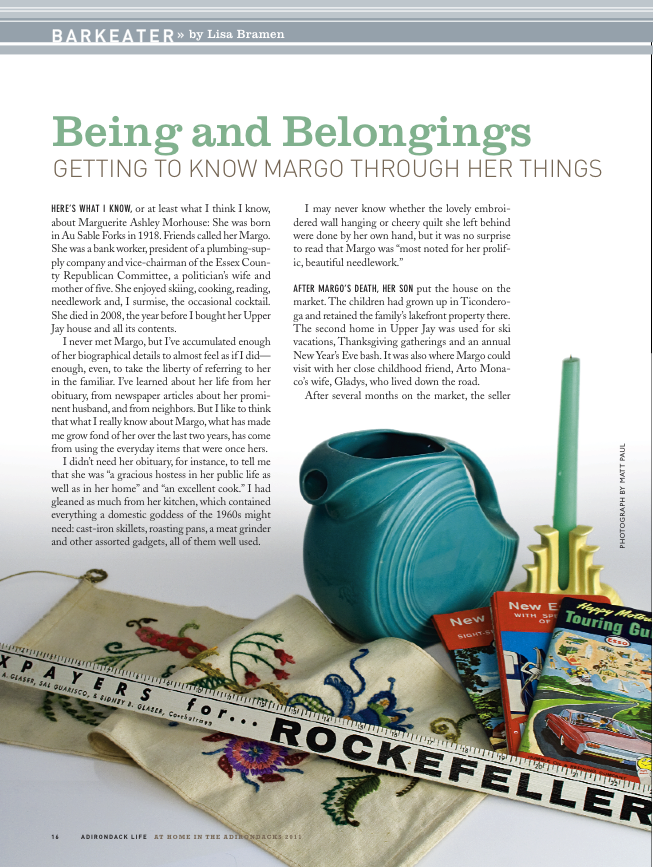
Here’s what I know, or at least what I think I know, about Marguerite Ashley Morhouse: She was born in Au Sable Forks in 1918. Friends called her Margo. She was a bank worker, president of a plumbing-supply company and vice-chairman of the Essex County Republican Committee, a politician’s wife and mother of five.

I drove for nearly an hour on quiet roads through the northernmost part of the Adirondack Park. T-shirt shops and twiggy Great Camps are scarce around here—along with nearly everything but the occasional cluster of tidy raised ranches and mobile homes of every vintage, with miles of sprawling green acres between.
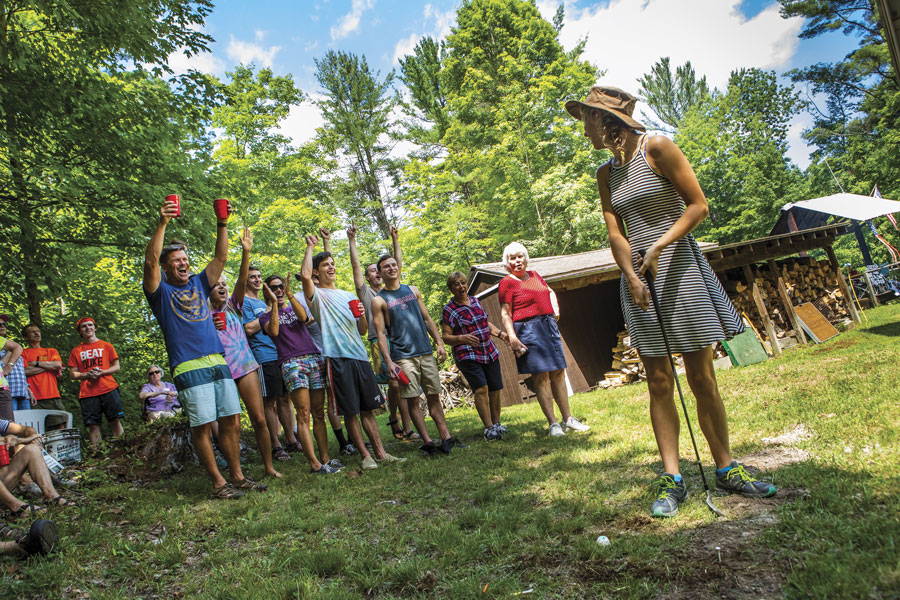
The keg had been tapped, the morning’s firewood–stacking conga line completed, and the day’s festivities were well underway when I walked up Kindervolk’s dirt driveway on a Saturday afternoon last August.
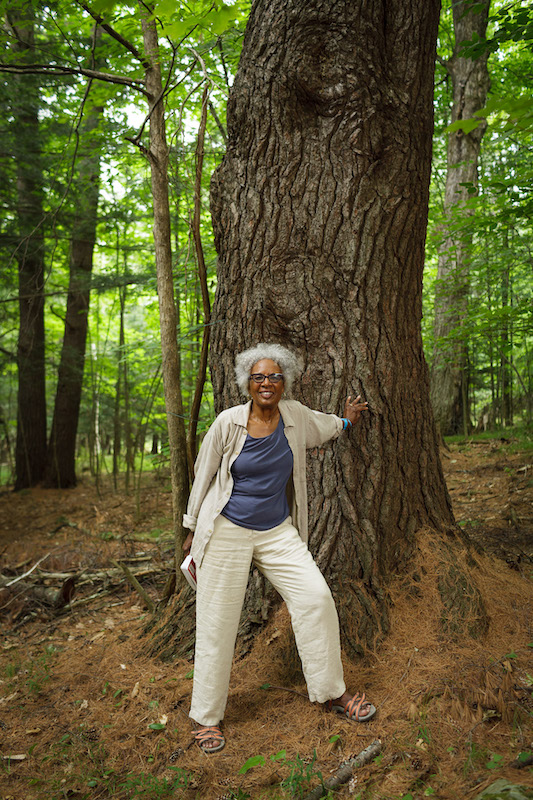
Nell Painter was born into segregation at the Houston Hospital for Negroes in 1942. If her family hadn’t relocated to Oakland, California, when she was a few weeks old, Texas’s Jim Crow laws would have dictated where she could go to school, the library, the pool. Family trips in the countryside would be out of the question—too dangerous. Not so out West, Painter recalls in her recent memoir, Old in Art School. “My parents drove us around California with the abandon of southerners finally allowed the freedom of the out-of-doors that had been denied them in the South.”
Now retired from a distinguished career as a Princeton University historian and author of a number of influential books, Painter has traveled the world. In the summers, when her New Jersey home is too hot and muggy for a woman raised on brisk Bay Area breezes, it’s to the Adirondacks that she and her husband, Glenn Shafer, retreat. In their New Russia living room, in front of a picture window framing their shady yard, she recounts how they discovered the Adirondack Park.
Slumping into a pew in mock boredom, Pam Broiles leans onto the armrest, pointing out the patina of a century of elbows propped there. “I can just imagine some farmer saying, ‘When is he going to stop talking?’”
It was details like these—or the wad of fossilized spruce gum stuck under a pew near the back of the church, the yellowed pages of hymnals printed in 1897, the names of long-dead workers scrawled in the belfry—that attracted Broiles and her husband, Lenny, to buy the Wells Baptist Church in 2012 and turn it into a performance venue.
Built in 1845 in the southern Adirondack town of Wells, on Lake Algonquin, the tidy Greek Revival church closed in 1950. The now-defunct Hamilton County Historical Society owned the building for several decades—it was added to the National Register of Historic Places in 1986—and had hired Lenny, a restoration carpenter, to do some work on it.
“We both really loved the architecture and history of one of the oldest churches in Hamilton County,” says Pam. “When it went up for sale, we were moved to buy it and bring it back to life.”


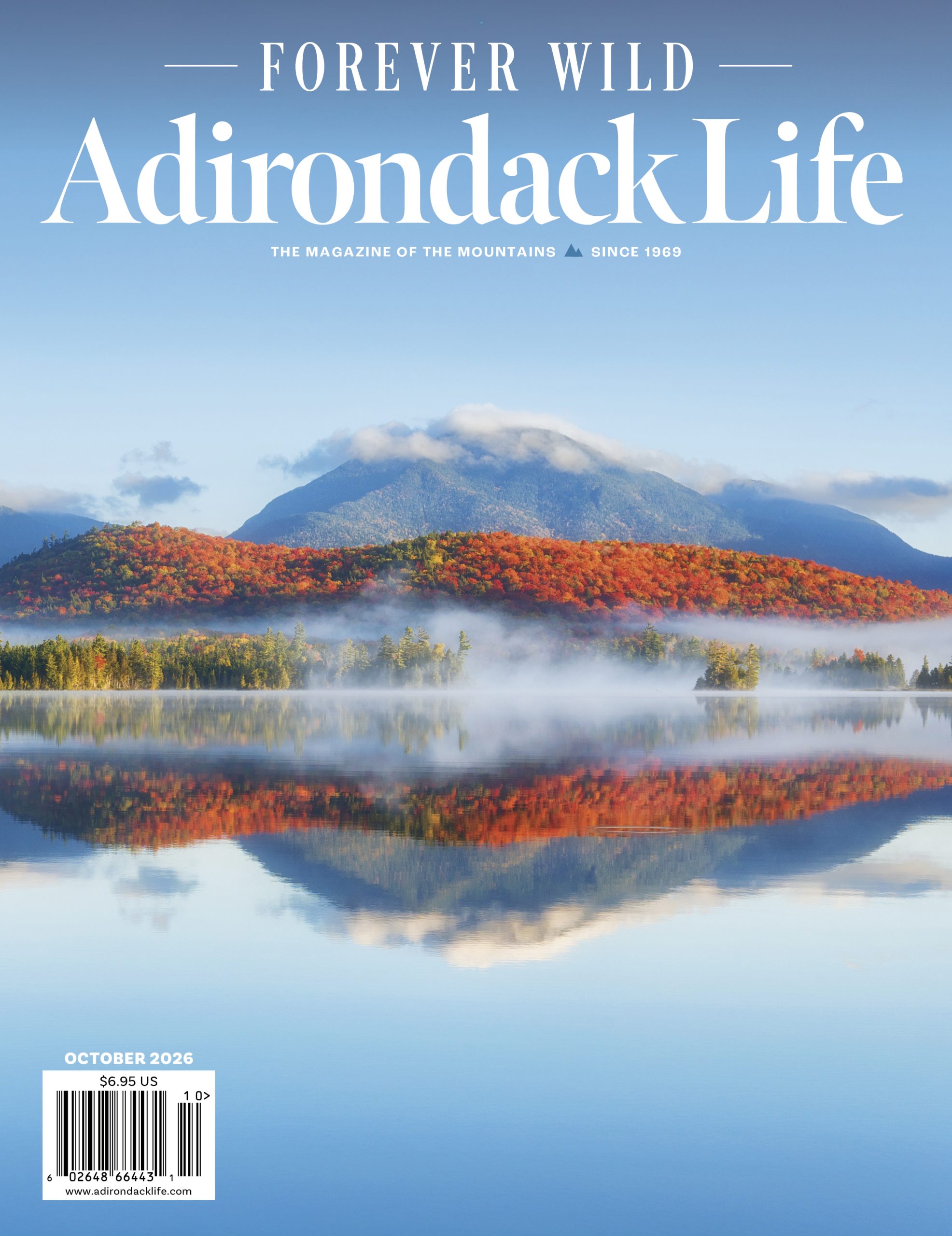
Lost hikers, splintered bones and wildfires—a forest ranger reflects on more than two decades of coming to the rescue. Plus the oldest tavern in the Adirondacks, a trip through James Bond’s Lake George, and new energy in Schroon Lake.







Learn about advertising opportunities in Adirondack Life Magazine.
