On April 30, after 26 years as a forest ranger, Rob Praczkajlo retired.
He’s having a hard time with it.
You live rangering. Dispatch calls on a blizzardy night and you roll out of bed, ready to hike miles to find a lost hiker in armpit-deep snow on Marcy. A swimmer’s disappeared beneath the falls at Wilmington’s flume, and you rush away from a birthday party or a school concert. Maybe it’s a fire or a natural disaster. Or a person with dementia who’s wandered into the forest. Winter, spring, summer, fall, it never ends.
Praczkajlo (pronounced pra-jack-a-lo) has rescued thousands of people, carried some 300 off mountains and out of the woods, educated countless hikers, and trained fellow rangers. And now, after a few months as a civilian, he’s reflecting on his career. At 53 he’s physically intact and mentally stable and he wants to keep it that way. It was time to leave the job, he says, but “it’s hard to talk about,” because, “I still want to be doing it.” Especially when he considers the happy stuff. “The most amazing aspect of the ranger job is that you get to do what everybody comes to the Adirondacks to do on their vacations or for recreation,” he says. “You hike, rock climb, ice climb and SUP and swim and boat and ski.”
There’s “job satisfaction every single day. Even if it’s as simple as helping a motorist change a flat tire or giving directions or speaking to someone on the phone who needs help with a trip plan, every day you go home and say, ‘I love that. I helped someone.’” Though, he adds, “There’s also satisfaction in catching someone dumping bags and bags of trash on state land.”
But there’s dark stuff too. So much death. Praczkajlo estimates he’s encountered at least 150 dead bodies during his career. He’s carried half a dozen deceased hikers off of Cascade Mountain alone. He’s seen smashed, bloody faces after falls. Splintered bones. The aftermath of suicides. People who’ve succumbed to hypothermia. The remains of bodies after nature does what it does. You can’t erase that from your mind.
Even when you find a lost person, which “is what it must feel like to score the winning touchdown in the Super Bowl,” he says, “there’s still an emotional dump.” After saving a man from drowning in West Canada Creek, “I dragged him out of the water and it was just, boom! A mountain of feelings that hit me. It’s the elation of it. You think, Holy shit, that was insane.” What follows is the dread of what could have gone wrong. Or what could have gone better, like in the case of a rescue on Nippletop. “The guy lost all his toes and fingers [from frostbite] and I questioned myself, whether I had provided the proper care, and it wore on me.” Or the realization of how death is just a whisper away, that the right strategic plan and the speed necessary to reach a victim determine the outcome. Remembering a December rescue on Algonquin, Praczkajlo takes a minute and squeezes his eyes shut before describing the events of that night. He and fellow rangers “booked it up” the mountain and found the 20-something-year-old near tree line, “dressed like he was going to play basketball.” He was severely hypothermic—“gonzo,” as Praczkajlo describes people in that state, when their body temperature drops below 95 degrees—“stumbling like a drunken college kid.” The hiker “was probably two hours from death.”
Praczkajlo has pulled people from wrecked cars, gathered bodies from plane crashes, seen violent domestic incidents, but, he says, “it’s the woods that get me.” The Adirondack Park is the people’s place—it belongs to all to explore and enjoy. “The majority of people we rescue, they’re recreating, doing something fun with their family or friends.” If they lose their way or run into trouble, rangers “find out everything they can to locate them. You’re almost a part of the family, asking questions, so ingrained in their lives.” And “then if you find that person dead in the woods, you personally feel so much sadness for the family. It’s not just a body but a grandparent, parent, aunt, uncle, sibling, child. Lots of people love that person and they have to go home from vacation without them.”
It can crush you.
As a kid growing up near Buffalo, Rob Praczkajlo camped, fished and hunted. His uncle was a conservation officer for the Department of Environmental Conservation (DEC) and shared stories about catching poachers. “I thought that was really amazing,” says Praczkajlo. At 12 he attended the DEC’s Camp Rushford, sleeping in a log bunkhouse and learning about conservation. By the time he was in high school he knew he wanted to be a New York State forest ranger, so Paul Smith’s College is where he landed, majoring in forest recreation. But when he graduated in 1993, there was a DEC hiring freeze. “It was really difficult to get into the forest rangers,” he says. Five years later the state offered a civil service exam for rangers, but it wasn’t until 2000 that he was offered a position at the DEC Ranger Academy, back then in Oswego. Nowadays the academy, which still accepts recruits sporadically, bounces between Newcomb and the Ranger School in Wanakena.
The ranger job has evolved since 1885, when a forest commission was established to protect New York State’s newly designated Forest Preserve. (The Adirondack Park was born seven years later.) In those early days the focus was on fire. Men—back then, only men—were charged with battling the blazes that scorched the landscape, as many as 600,000 acres in 1903 because of drought, human carelessness and spark-spitting trains. Through time the job expanded to patrolling to prevent fire, reporting violations of game laws, and then, as the public embraced outdoor recreation, building trails and campsites, granting permits and ticketing offenders. In 2006, rangers were no longer just considered peace officers, but given the same powers of law enforcement as State Police, minus obtaining search warrants.
Praczkajlo’s life as a ranger began, at a base salary of $27,000 a year, downstate in Orange County and then moved to the Adirondacks—Northville, then Jay, and finally, in 2018, the High Peaks. That’s where he always wanted to be.
Today, of the DEC’s nine statewide regions, regions four (the Catskills) and five (the Adirondacks) see the most incidents. When Praczkajlo began his assignment in region five’s High Peaks, there were six rangers dedicated to that district. Now there are eight, though Praczkajlo has yet to be replaced. He thinks “it should be a minimum of 10.” (He says there are 103 field rangers statewide, but it would take 200 to properly protect people and public lands.) Still, when dispatch calls with an emergency, it doesn’t necessarily matter where you’re based. During his time in Jay, Praczkajlo worked “in the High Peaks nonstop doing rescues.” Throughout his career he averaged 800 hours of overtime a year. “There’s nothing saying you have to answer the phone—it’s more about your own work ethic and self-motivation.” Plus, there’s “a huge expectation by your peers that you’ll take the call and show up.”
And show up and show up. In region five in 2024 there were 218 rescue calls; in 2025 there were 185. Unlike even a decade earlier, now emergencies happen year-round, partly, says Praczkajlo, because of modern gear. In the 1970s only a handful of adventurous skiers on skinny wooden cross-country skis tackled backcountry slopes. Now you can buy ultralight traction-control snowshoes and hourglass-shaped carbon fiber touring skis. State-of-the-art equipment doesn’t change the whims of Adirondack weather or replace map and compass skills. You still have to know what you’re doing.
Then there’s social media. The stunning shots of people on peaks or riding rapids or dangling from cliffs that you’d see in guidebooks and magazines now appear millions of times over via Instagram. A summit selfie gets lots of attention. It also draws folks to try it themselves, sometimes unaware of the fitness level, equipment and planning necessary. (On a summer weekend, as many as 400 people a day might hike Cascade Mountain; at 4,098 feet, it’s smallish among the region’s 46 highest peaks, but still a five-mile round trip with a 1,900-foot elevation gain.)
The DEC posts a Forest Rangers Week in Review that outlines workshops, training, alerts and wilderness rescues. It often reports twisted ankles, cardiac events and hikers suffering from dehydration. People in the latter category, says Praczkajlo, are usually just out of shape. Others underestimate the skill needed to, say, climb the Trap Dike, or too often they rely on a cell phone for trail maps or as a substitute for a headlamp. He’s seen hikers in flip-flops and blue jeans, with barely enough water to get through a couple of hours. Praczkajlo recalls a young couple rescued on Algonquin after surviving a remarkable four winter nights near the summit, “dressed like they were going to the mall.” Conditions above tree line can be completely different from those at the trailhead.
A rescue that involved a man who planned to hike the Dix Range in 24 hours in February resulted in an all-night search via land and air. The hiker, suffering from hypothermia and near death, staggering, says Praczkajlo, in “eyeball-deep snow” and falling into spruce pits, was finally hoisted off a tributary of Slide Brook in a helicopter. “He was soaking wet, wearing socks on his hands.” Later, Praczkajlo went to the hospital to retrieve the rangers’ gear and interview the man, whose frostbitten fingers were the color of grape Kool-Aid. It turned out the hiker had been rescued in the Sewards the previous fall. That time he’d been ill-equipped. This time he’d been wearing what Praczkajlo describes as “summer hiking boots.”
But there’s more to why things go wrong here, says Praczkajlo. “Hike in any other state or country, go to their premier place—their highest peak or easiest peak they showcase—and you’ll find a hardened surface, good signage, a nice parking lot.” In the Adirondacks, “we don’t have that. No wonder people get lost when they’re hiking our trails. Most are like hiking in a stream and when people get to a natural stream oftentimes it looks like a better place to hike than our actual trail. And there’s no sign to point them in the right direction. There’s blowdown that we can’t clear because of staffing, let alone do maintenance on the trails and work on signage. This is the people’s land and we should protect them while they’re using it.”
Forest rangers assist in manhunts—in 1973, serial rapist and killer Robert Garrow; in 2006, murderer Bucky Phillips; and in 2015, Richard Matt and David Sweat, both serving time for homicide. Praczkajlo was part of the search for Matt and Sweat after they broke out of Clinton Correctional Facility, in Dannemora. He says, “There was a level of fear the whole time—they had nothing to lose.” After 22 days on the run, Matt had been killed and Sweat was apprehended. “Ultimately the Adirondacks got them—the bugs, the woods, all forcing them into making bad choices.”
Praczkajlo was first on the scene in the 2018 search for a Toronto firefighter who vanished from Whiteface Mountain Ski Area after a day on the slopes with his colleagues. Praczkajlo worked ski patrol at Whiteface before becoming a ranger and knows the mountain well. “On a snowmobile I did laps, drove to the top of Little Whiteface, checked Excelsior and other fall zones.” Nothing. The circumstances were “just weird.” In addition to rangers, more than a hundred volunteers, State Police, Homeland Security and Border Patrol scoured the mountain, but still no sign. Even actor Dan Aykroyd showed up to talk with law enforcement about his theory: the skier had been abducted by aliens. And then, almost a week later, the missing man called his wife. He was in California with a fresh haircut and a new iPhone, claiming he’d hit his head, flagged down a trucker along Wilmington’s Notch road and that’s all he could remember.
Then there are wildlife encounters. Territorial otters and goshawks have been known to attack humans. Pine martens, illegally fed by hikers, most recently on Big Slide, accost other potential food sources. Issues with black bears are a constant because some campers ignore food storage protocol in the backcountry—“a fed animal is a dead animal because it won’t stop seeking food,” says Praczkajlo. And when people attempt to rescue deer or pets stranded on frozen rivers and lakes, “too often it ends with the rescuer drowning.”
Rangers respond to natural disasters. In 2011, after Tropical Storm Irene pummeled and flooded parts of the Adirondacks, Praczkajlo piloted an airboat to pluck people from their homes. Then he spent months paddling Environmental Protection Agency staff down area rivers to gather hazardous material. In 2024 he and a swift-water rescue team traveled to Burnsville, North Carolina, in the Blue Ridge Mountains, after Hurricane Helene ravaged the region. They spent weeks assisting with rescues, evacuations and recovering bodies.
And true to their firefighting roots, rangers are deployed to wildfires. In his career, Praczkajlo’s been sent 15 times to battle blazes in Montana, California and Quebec. “Those trips,” he says, “are a great way to get significant experience with wildland fire techniques and incident command systems. You see massive fires and how they react to that day’s weather and topography and fuel type and bring that experience back to New York.”
Infernos like the ones out West haven’t happened in the Adirondacks in recent years—in 2025, fire affected a total of 149 acres in region five—but, says Praczkajlo, “it’s definitely coming. There will be more occurrences of wildland fire in New York in general, and in the High Peaks. Every year in spring we have a week or so of extreme fire danger that, with the right ignition start, can cause significant acreage to burn. Take the alpine zone of Mount Marcy and other High Peaks in May. If a fire were started in those areas it would be a running ground fire. Add 75-mile winds, like what happened in Hawaii”—when flames consumed Lahaina—“and everything becomes fuel.”
Serving the public in so many ways requires a physicality—“woods fit, not gym fit,” says Praczkajlo—and constant training. Rangers receive certification in all types of rescue—swift water, high-angle rope, watercraft, and helicopter hoist among them—as well as wildland firefighting, firearms, first response, incident command and on and on. Lead instructors, like Praczkajlo was before retiring, are typically 20-year rangers who travel across New York to teach other rangers.
That training is critical, but Praczkajlo says rangers also need proper equipment to stay safe and be successful. They’re each issued a truck, the uniform and some personal protective equipment, but they lack other essentials. Rangers receive a boot allowance of $175 a year, “but a pair of good hiking boots, particularly for winter rescues, can be more than $500.” So they purchase their own. (Praczkajlo carried five pairs in his truck at all times, each specific to the weather and circumstance.) Rangers are issued one large backpack in the academy, but, says Praczkajlo, the job “requires having a minimum of three backpacks for different seasons and situations. When a backpack issued wears out, it isn’t replaced” by the DEC.
In 2023, after decades of requests, rangers were finally given non-cotton summer uniforms. The previous uniform’s chafing, unbreathable fabric contradicted the “cotton kills” safety mantra extended to the public and, says Praczkajlo, was “unprofessional and embarrassing when you hike in to rescue someone and you’re drenched head to toe, looking like you peed your pants.”
Rangers, he says, also need puffy outerwear—mittens, pants, coats, booties—“to survive in –40 degree temperatures with windchills of –70 below” and warm the people they’re saving. They need winter tents, sleeping bags and Thermarest sleeping pads. They need additional headlamps so they don’t have to put theirs on the person they rescue. For 20-plus years, before and during his role as the rangers’ union director, Praczkajlo submitted requests for these items. They still don’t have them. For now, rangers buy what they need on their own dime, or lean on the Forest Ranger Foundation to fill the gap. The foundation, a nonprofit that relies on donations, was established four years ago by High Peaks ranger Andrew Lewis (who, because he didn’t have the appropriate protective gear, almost lost part of a thumb to frostbite during a Mount Marcy rescue). In addition to equipment, the foundation funds training, and aids active-duty rangers and their families with resources to support physical and mental health.
In 2022, High Peaks ranger Chris Kostoss died by suicide. The following year ranger David Cornell, who’d worked in the southern Adirondacks, died by suicide. (In 2022 a ranger working in district four died of an undisclosed cause, and in 2025 an assistant ranger was found dead at Duck Hole, the cause undetermined.)
In a statement that followed Kostoss’s death, the DEC commissioner at the time highlighted available resources for rangers: crisis prevention numbers listed on the New York State Office of Mental Health website.
But offering phone numbers doesn’t cut it, says Praczkajlo. “You would think the New York DEC would have a mental health professional hired and you can go to them and trust them completely and they facilitate the direction that you as an employee need to take.” (A couple of years ago, after a harrowing rescue that troubled Praczkajlo, he confided in a captain who told him, “You have good health insurance, find a good therapist.”)
There was the night Kostoss had to sleep in a lean-to with a dead hiker, alone, while waiting for criminal investigators and a carryout team. “He was angry and upset and f***d up over that,” says Praczkajlo, who himself has wrestled with traumatic situations. During a search for an elderly hunter near St. Regis Falls, he found the man’s abandoned rifle and pack. Knowing the hunter had to be nearby, “I felt paralyzed. I thought, I can’t do another body.”
He says, “I think the professionals call it accumulated stress. I started to recognize that I would think back about rescues and recoveries we did and it would make me upset months and years later. I learned to insulate myself from that.”
Praczkajlo tells the newer rangers, “Start protecting yourself early in your career. Sometimes you have to do the dirty work—picking skull fragments and teeth and bones off the ground. But if there are other rangers who can do it, let them.”
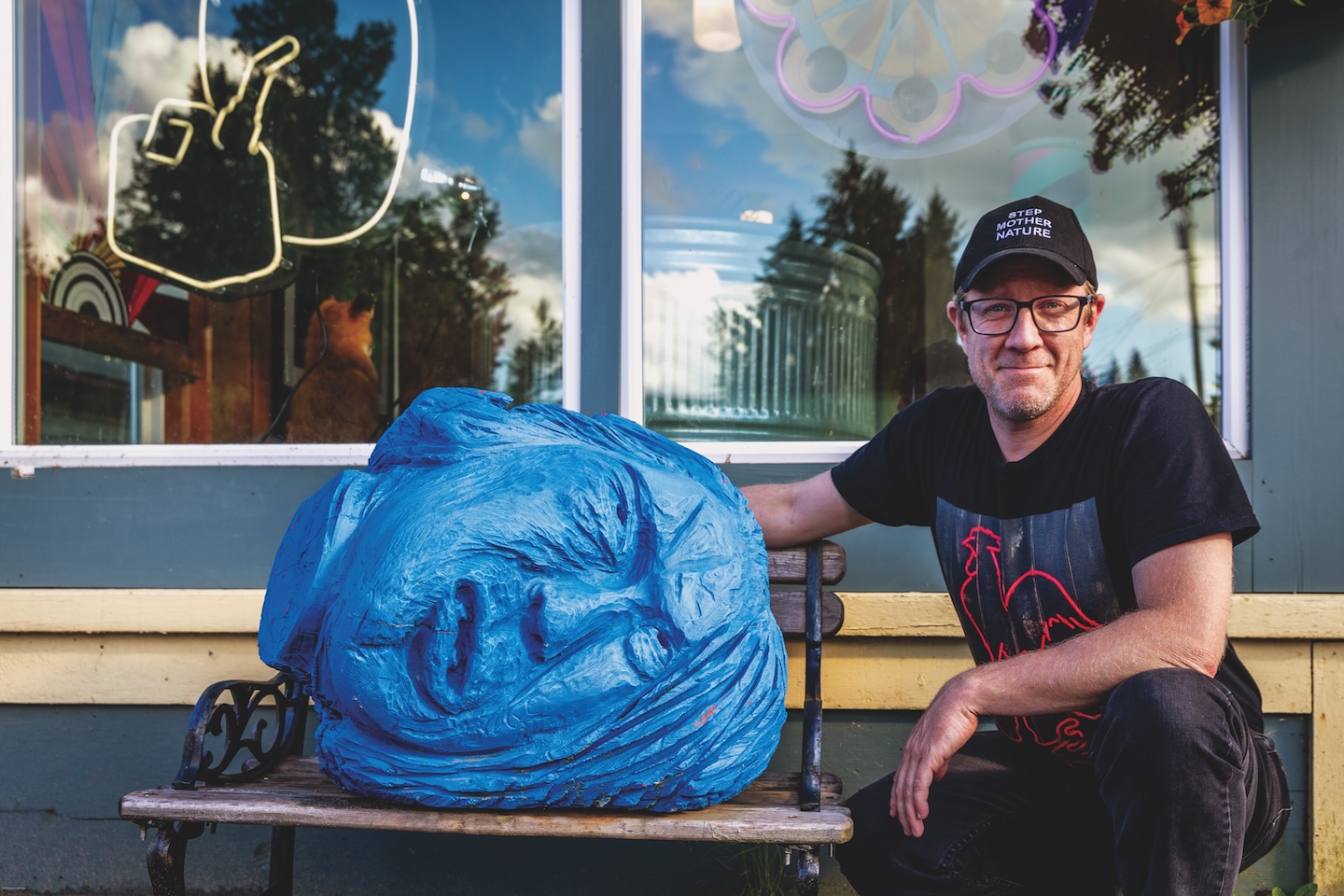
On a recent summer morning Praczkajlo’s wearing shorts, a T-shirt and ball cap—jarring if, like many Adirondackers, you’ve only known him as a ranger. His retirement party, thrown by retired ranger Scott van Laer, happened a few weeks ago, and he’s still settling into the rhythm of life as a civilian. He laughs, recounting the card Ranger Lewis’s eight-year-old daughter made him. She wrote, “Now you’re a person!”
Last year Praczkajlo married for the third time, to a fellow ranger. In May, just after he retired, they finally took a honeymoon, traveling through Labrador and Newfoundland. Praczkajlo accepts responsibility for his previous failed relationships—“the ranger job was my life, everything revolved around work. I chose the job.” This time there’s an institutional and emotional understanding that supports his wife’s work and, for better or worse, still connects him to the forest rangers.
A few days ago it was pouring rain. Praczkajlo texted van Laer: “Last night was nautical. I sure was glad that I knew the phone wouldn’t ring to go out into the lion’s mouth.”
Now he chokes up as he reads it aloud. “I just miss saving people,” he says. Letting go “is going to take some time. How do you stop being who you are?”