More Articles From

Events

The Irondequoit

The Irondequoit

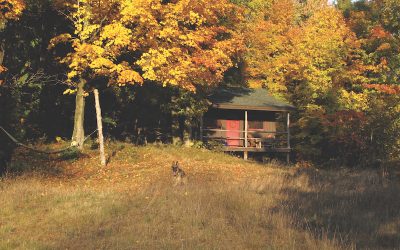
The Irondequoit Inn sits on a small rise at Piseco Lake’s northern end. Eight wooden steps lead from hillside to front porch. When I arrive for my first visit on a fall afternoon, I’m behind schedule. I hit the stairs at speed, my footfalls staccato on wooden planks.

Halfway up, a broad panorama registers in my peripheral vision, and I halt mid-step. The porch overlooks the 2,873-acre lake, carved and filled by receding glaciers more than 15,000 years ago, today set beneath a humble coronet of Adirondack foothills. This wild landscape is found within Hamilton County, the least populated county in New York State, with 4,700 residents dispersed over 1,808 square miles. A breeze rises off the lake, crosses a sandy beach and sloping lawn, and ripples through scarlet maples, bronze oaks and golden aspens. I promptly forget the Gregorian calendar and give myself over to geologic time.
Rebel Love

Rebel Love

Sometimes when we have nothing else to argue about, my husband, three sons and I debate which of our dogs has been the smartest. Over the past 15 years we have owned four: all Labrador retrievers released as puppies from Guiding Eyes for the Blind, made available for adoption as pets when, at eight weeks of age, they failed to demonstrate the exact mix of measurable traits needed to succeed as service dogs. When the members of my family debate which of our four would-be guide dogs was the smartest—well, Rebel’s name just never comes up.

Early Work of Rockwell Kent

Throughout 2019, in celebration of Adirondack Life’s 50th anniversary, we’re sharing an article per week from our archives—one for each year since 1970. First up is an interview with the acclaimed artist Rockwell Kent, by Peggy Byrne. Byrne was such a frequent contributor in the magazine’s early days that, according to her son, Jeffery, the editors encouraged her to write some articles under the pen name Philomena Hogarth.

Take a living legend. Set him in a cup of mountains above Au­ Sable Forks in the Adirondacks at Asgaard Farm—Home of the Gods. This is Rockwell Kent, il­lustrator, painter, writer, designer, engraver, architect—a man whose eighty-seven years seem less a burden to him than a limit—for he wonders how much time is left him to paint and write and draw. And indeed it seems that the al­most immortal living legend in the home of the immortal gods has energy for another eighty-seven years of prolific output.

Otter Space

Otter Space

My story begins like many others found in the pages of Adirondack Life, of summer—and some winter—holidays spent at a beloved camp. My grandfather Floyd Betters bought Camp Hohoiken on Upper Saranac Lake in 1964 from the Colgate family, of the toothpaste fortune. The story my grandfather told is that Mr. and Mrs. Colgate were at a party on one of the islands and someone slighted Mrs. Colgate, who turned to her husband and informed him that they were leaving, immediately. Mr. Colgate assumed this meant that he was taking his wife home for the evening, but what she actually meant was that they would be leaving Saranac Lake that night, never to return.

Saving Account

Every old house has a story or two. You might read it in the architecture, how native and exotic materials were combined; how tastes, tools and technologies evolved; how growing families were accommodated, how rising or falling fortunes were reflected in the facades we see from the road. Sometimes scraps of past lives linger, giving a glimpse of just who sat in a porch rocker or peered out of an attic window.

At an age when many people are looking for an oceanfront condo to escape harsh weather and home upkeep, Bruce and Darcey Hale chose to move to Willsboro full time and begin an epic historic preservation adventure involving dozens of acres and many structures. Bruce, 76, has been connected with this Willsboro Point property—once the domain of the Clark family, some of the area’s earliest settlers—since before he was born, when his 14-year-old father drove his mother, Elizabeth, and Mary Hope Cooley, a Clark descendant, to a cottage here named Cedar Lodge. Bruce’s parents bought Cedar Lodge from Mary Cooley in 1949 and Scragwood in 1958, using them as summer getaways. Darcey, who grew up in rural Virginia, first set foot on this land in 1994, and it was “love at first sight.” The fields, forests, old buildings, stone fences and pervasive peace resonated, a welcome change from Boston, where she was director of the French-American School. Bruce, an electrical engineer, was living in Natick, Massachusetts.

For this couple, these buildings—Cedar Lodge, Scragwood and Old Elm—are encyclopedic, not just as structural narratives but as deep repositories of material culture. The Clarks, who owned hundreds of acres here for more than a century, arrived from Connecticut in 1801. Succeeding generations became farmers, dairymen, quarrymen, boatbuilders, travelers and above all, assiduous savers. They kept letters, ledgers and diaries; clipped newspaper articles; filed away seed catalogs, religious tracts and hymnals; mapped their orchards and gardens; and carefully retained everything from knitting patterns (and the socks made from them) to quilts stitched with the signatures of the makers.

Born Again

Slumping into a pew in mock boredom, Pam Broiles leans onto the armrest, pointing out the patina of a century of elbows propped there. “I can just imagine some farmer saying, ‘When is he going to stop talking?’”

It was details like these—or the wad of fossilized spruce gum stuck under a pew near the back of the church, the yellowed pages of hymnals printed in 1897, the names of long-dead workers scrawled in the belfry—that attracted Broiles and her husband, Lenny, to buy the Wells Baptist Church in 2012 and turn it into a performance venue.

Built in 1845 in the southern Adirondack town of Wells, on Lake Algonquin, the tidy Greek Revival church closed in 1950. The now-defunct Hamilton County Historical Society owned the building for several decades—it was added to the National Register of Historic Places in 1986—and had hired Lenny, a restoration carpenter, to do some work on it.

“We both really loved the architecture and history of one of the oldest churches in Hamilton County,” says Pam. “When it went up for sale, we were moved to buy it and bring it back to life.”

Super Bowl

Super Bowl

Every weekend they stream north from the interstate, the adventurers and explorers of the Adirondacks, their vessels piled with skis and snowboards, kayaks and bikes. Off Exit 23 they’ll stand impatiently at the traffic lights in Warrensburg, and make pit stops for gas and supplies, before turning onto Route 28, full speed ahead.

Twenty miles later, at 60 miles per hour, they’ll enter the bypass that slices past North Creek. Down the long hill to the valley below, their hopes fixed on the waiting lakes and trails ahead, few will notice the two signs pointing to the Business District, or the shadowed steeples of Main Street mixed behind the maples and birches.

Fewer still might see the small entrance on the left, or the only sign marking it, a cairn of granite with a brown and blue plaque above, Ski Bowl Park. A high dune juts up against the entrance, the north edge of the Bowl, and runs along the bypass, cutting off any view of the base.

Before Gore and Whiteface, before the bypass and the interstate, the North Creek Ski Bowl was one of the preeminent ski areas in the country. By the mid-1930s, thousands were arriving every weekend, not by car, but on snow trains, the Friday overnight from Grand Central. It was the site of the first ski tow in the state, the first ski patrol in the country. And even after the war, when the snow trains stopped unloading, it was still the best town park a kid could want, with skating and toboggan slides, and an overhead lift that topped the ridge.

In 1964, when the Gore Mountain Ski Center opened on the other side of the next ridge, the business owners imagined a windfall rushing down to the village. In that first year the skiers still had to drive into North Creek and circle by the old Bowl before climbing the access road to Gore. But the bypass cut through in ’65, whisking the skiers up without a hint of the history below. It sealed the town from the summer crowds as well, slowly suffocating the small shops, restaurants and hotels.

It also laid down a 30-foot wall of asphalt between the villagers and their Bowl, suffering it a long and quiet death. By the turn of this century the lift had been torn down and the historic trails overgrown. That year the old ski hut, built by the WPA in 1936, burned to the ground. The Ski Bowl’s primary value to its townspeople was as a sand mine for the highway department, and the road that took you to the dump.

It appeared as if much of the town’s park would disappear into the six-million-acre state park surrounding her, the trails fading into the ridge, one more in a wilderness of ridges. But the best story here is how that decline has been arrested, and then reversed. You can’t see much from the bypass, but those in the know are now slowing down and making that left turn.

They’re coming to ski those trails of history, as well as some of the most challenging new terrain at Gore Mountain. And they’re coming for the new Nordic Skiing Center, which in three years has evolved from a high-school practice track to the site this March of the U16 New England Championships. When the snow melts, they’re here for the expanding network of mountain-bike trails, designed by the former ranger in these parts, Steve Ovitt, and maintained by the new nonprofit Upper Hudson Trails Alliance. The Bowl is back, a partnership of state and local resources, bound by the tireless efforts of those who never left it.

Just Beyond the River

Just Beyond the River

The artist Daesha Devón Harris doesn’t wait around for inspiration. She looks for it; she brings it home. She takes it from memories of family picnics at Moreau Lake and Fish Creek near Saratoga Springs, where she grew up. From black folktales, slave narratives, poems of the Harlem Renaissance, and the story of Timbucto, an antebellum black settlement in North Elba she discovered in an exhibition at the John Brown farm. These influences inform her sense of mission as lushly as springs refresh a stream, and you can see them pulsing in her art as well, especially in her recent solo exhibition, Just Beyond the River: A Folktale, in the Courthouse Gallery at the Lake George Arts Project.

Four Peaks

Four Peaks

IN THE FIRST FIVE YEARS after moving my family back to my native New York after a long out-of-state exile, I wandered the Adirondacks searching in vain for the perfect vacation rental. Perhaps my criteria were unrealistic—stunning natural beauty and absolute solitude on a budget, anyone?—but, for whatever reason, nothing I found seemed to deserve a second visit. When I discovered a place with backwoods cabins lacking running water and electricity, I almost didn’t give it another look. My wife and our two teens had never been keen on my backpacking exploits. Could pretty views compensate for a week of latrines and cowboy showers?

Our first visit resolved all doubts. The property’s original camp, one mile off-road near Jay in the northeastern Adirondacks, was built as a World War II combat veteran’s refuge. After the next owners bought it and its 90 acres, they purchased several more adjoining parcels and built six more camps scattered across more than 600 acres of forest and fields. The original structure, which they named the Cabin, occupied one of the prettiest spots. On the fringe of a grove of towering white pines, it overlooked an expansive meadow framed by two of the four mountains that gave the place its name: Four Peaks.

This was love at first sight. Over the years, it would mature into something deeper. This was also the start of a long and complicated relationship with an Adirondack original, the owner Martin Schwalbaum.

Life Support

Life Support

Three-year-old Michael Hart II loves mud puddles, the Power Rangers and playing soccer—things most kids his age embrace. But Michael’s also undergone two heart surgeries, has low muscle tone, severe astigmatism in both eyes, hearing loss in both ears and, because of his frustration at not being able to communicate, throws fits so epic, nothing—nothing—soothes him, says his mom, Jessica Smith.

On Sale Now

April 2026

The Wildlife Issue! A peek inside the secret lives of Adirondack moose by Jeff Nadler, wildlife portraits by Pamela Underhill Karaz, an opossum search party led by best-selling author Kristin Kimball, plus loons, turtles, turkeys, chipmunks, coyotes and more.


Adirondack Life Magazine

Subscribe Today!

Latest Articles

Follow Us

Adirondack Life Store

for calendars, apparel, maps and more!