October 2018

Adirondack Birdman

Adirondack Birdman

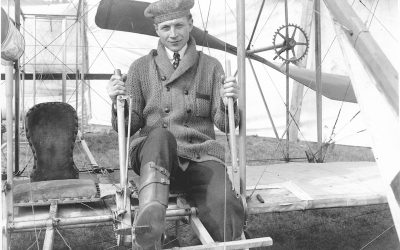
As the sun was setting on October 2, 1912, a half-frozen George A. Gray successfully landed his Burgess-Wright Model B biplane in a level field of grain stubble about 100 feet from a small house and a large barn. It was the first suitable landing place he saw after descending through the clouds and fog that had obscured everything below. He had no idea where he was. He had been lost, he was exceedingly cold and his plane had a fuel leak. It had not been a true emergency, but it had been close.

Upon landing, he was quickly surrounded by the property owner—referred to as Farmer Martin in contemporary newspaper accounts—and three or four of his children, all excited to see a flying machine unexpectedly descend from the clouds. Gray switched off the gasoline to save what he had left (and to avoid the possibility of a fire) and apologized profusely for the fright he had given them. Martin said he was glad that Gray had landed safely, and that it was a thrill to have an airship at his farm. He invited Gray into his house to warm up.

Just Beyond the River

Just Beyond the River

The artist Daesha Devón Harris doesn’t wait around for inspiration. She looks for it; she brings it home. She takes it from memories of family picnics at Moreau Lake and Fish Creek near Saratoga Springs, where she grew up. From black folktales, slave narratives, poems of the Harlem Renaissance, and the story of Timbucto, an antebellum black settlement in North Elba she discovered in an exhibition at the John Brown farm. These influences inform her sense of mission as lushly as springs refresh a stream, and you can see them pulsing in her art as well, especially in her recent solo exhibition, Just Beyond the River: A Folktale, in the Courthouse Gallery at the Lake George Arts Project.

Bark Eaters

Bark Eaters

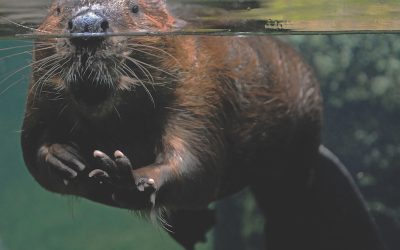
On April 27, 1905, a four-man “Army of Liberation” departed from Old Forge for the Fourth Lake of the Fulton Chain, two zinc-lined crates stowed aboard their rowboats. After a day of rowing, the men ditched their vessels and hiked 12 miles down a snowbound trail—“over hills, through swamps, and across rivers,” wrote Harry  Radford, the quartet’s leader. The party lugged the ungainly boxes in shifts, switching handlers every 10 minutes to ease the burden, and spent the night at a cabin owned by a hermit named Frank Gray. The next morning, the group toted their crates to a nearby stream to release their cargo: a pair of beavers. A year later, Gray spotted a lodge of mud and sticks in the same spot. The beavers had settled down.

Four centuries ago, a beaver colony in the Adirondacks wouldn’t have warranted a second thought. Once, wrote Radford, “every river, brook, and rill… [was] thickly peopled with these industrious and prolific animals.” But the fur trade—so influential that Albany was once known as Beverwyck—spelled doom for the aquatic hordes. By the 1670s, 80,000 pelts were flowing down the Hudson River annually, bound for Europe for felting into fashionable hats. When the state finally banned trapping in 1895, fewer than 10 beavers remained in New York.

The beaver’s story, however, wasn’t over yet. In 1904, the state devoted $500 to beaver reintroduction and bought seven live animals from Canada’s display at the Louisiana Purchase centennial in St. Louis. The acquisition, like the Louisiana Purchase itself, proved a spectacular bargain: the imports, along with other relocatees, flourished and bred. Scarcely a decade later, the Adirondacks hosted a stunning 15,000 beavers. These days up to 70,000 paddle-tailed builders swim the region, nearly as many as greeted Samuel de Champlain. And we’re just beginning to figure out how profoundly their return has restructured our forests.

Path Finders

Path Finders

It’s a luminous autumn day and Kyle Drake climbs a slope of Dial Mountain in the Dix Mountain Wilderness Area, threading through crimson-leafed witch hobble, navigating tangles of bronze ferns, fallen trees and tumbled rock. He wears a pair of blue gym shorts, a trim black beard and ball cap, and carries a backpack the size of a college-dorm refrigerator.

Every so often he pauses, shifting his shoulder straps and looking over the slope with a shepherd’s eye. “OK, gather ’round!” he calls to his hiking group. “Let’s have some water and look at the map and compass.” Kyle is 34, a veteran instructor with the National Outdoor Leadership School (NOLS), headquartered in Lander, Wyoming, where he lives.

Four men and women scramble wearily toward him through dense brush, looking grateful for a break. “There’s no trail,” says Jess Stapleton, sounding a little baffled at finding herself in a place where there’s literally no trace of civilization, not even a footpath. “We’re walking this ridgeline, pushing trees out of the way.”

She’s 25, athletic, a fairly experienced hiker and camper from Knoxville, Tennessee. But this is different, bigger and wilder. She and her fellow NOLS students are on a nine-day trip into some of the rawest terrain in the eastern U.S., their only comforts the ones they carry on their backs. “You get pushed to the point of almost losing it,” says LeAnn Turner, from Berkeley, California. She’s 31, grew up in the suburbs and never had any interest in the outdoors until a few years ago.

“You’re standing in the midst of dense woods, looking in every direction, not knowing which way you should go or where the ground will fall out from under you,” she says.

While resting, the group takes in a quick lesson on backcountry navigation, with Kyle explaining the difference between true north (that’s the pole) and magnetic north (located near Ellesmere Island, in northern Canada). He holds out the map and points through the canopy of glittering maple and birch at a distant spur of Bear Den Mountain, showing how to take an accurate bearing.

“I was surprised by the Adirondacks, how steep it is out here,” he admits, drawing his finger over the map’s dense contour lines. “It looks like this last little bit could be a little bit heinous.”

His students groan as they start upward again, but there’s a method at work here. Kyle’s job is to make sure these travelers—many of them brand-new to the outdoors—make the journey safely. But it’s also his mission to let them do most of the navigation and hard work themselves, while helping them stay mindful of what they’re doing, taking in the rare experience of moving through deep wilderness.

“It can be mentally exhausting,” he says. “But there’s value in the experience of things that are hard and emotionally taxing.”

His students have come to the Adirondacks from all over the country, bending the curve of busy modern lives and spending thousands of dollars to find exactly this kind of experience. This is important: They haven’t signed up for a comfy camping trip or a quick, glampy sort of holiday. NOLS promises real wildness, deep remoteness and solitude. When they talk about their reasons for being here, it sounds more like a kind of pilgrimage, a yearning they’re still trying to understand.

Little School in the Big Woods

Little School in the Big Woods

It was time for bean science in Kristin Delehanty’s second-grade class in Long Lake. The students peered down at their sprouted lima beans using magnifiers and microscopes to identify the embryo, the seed coat and the cotyledon—the first leaf to appear from a germinating seed. “That’s the seed coat,” observed Briggs Hample, an eight-year-old aspiring inventor with freckles and close-cropped red hair, pointing to the white, papery covering.

As the students carefully recorded what they observed, Delehanty had plenty of time to check in with each child. That is because she has only six students. Remarkably, those students not only make up her class, but the entire second grade, and that grade happens to be one of the largest at Long Lake Central School, where the first grade this school year consisted of just two students.

Return of the Natives

Return of the Natives

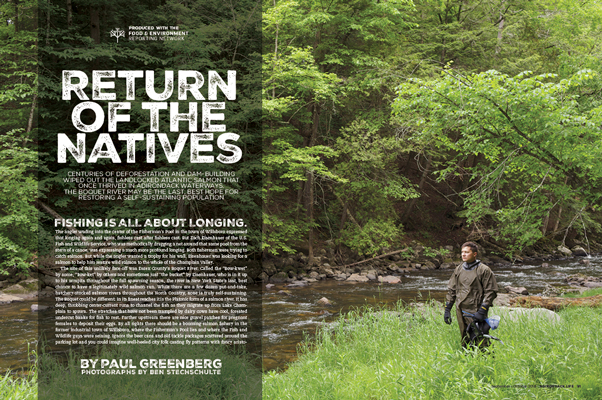
Fishing is all about longing. The angler wading into the center of the Fisherman’s Pool in the town of Willsboro expressed that longing again and again, fishless cast after fishless cast. But Zach Eisenhauer of the U.S. Fish and Wildlife Service, who was methodically dragging a net around that same pool from the stern of a canoe, was expressing a much more profound longing. Both fishermen were trying to catch salmon. But while the angler wanted a trophy for his wall, Eisenhauer was looking for a salmon to help him restore wild salmon to the whole of the Champlain Valley.

On Sale Now

February 2026

Meet Lake Placid’s Tate Frantz, a top ski-jumping contender at the Milan-Cortina Olympics—plus Fourth Lake ice hockey, North Creek Ski Bowl lore, brews at Lake Clear's historic Charlie’s Inn and more!

Adirondack Life Magazine

Subscribe Today!

Latest Articles

Follow Us

Adirondack Life Store

for calendars, apparel, maps and more!