August 2018

Eternal Love

Eternal Love

The best years of my life have, so far, passed in a crease of the Ausable River Valley. The love of my life, our children, our friends, our trials and triumphs—it’s all happened here. Recently, after the kids were tucked in and the dog walked, my husband and I sat on our front porch, the river roaring after days of rain, the creeping night swallowing the Jay Range in the distance.
March Past

March Past

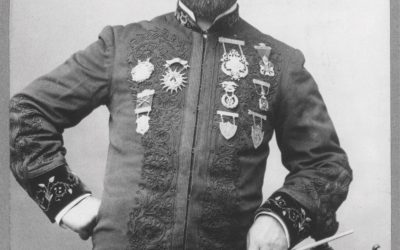
Decades after I last played John Philip Sousa’s “Stars and Stripes Forever” on a trumpet, with its thrilling strains still echoing in my head, I was hungry for a good Sousa story. I found one in Alfred Donaldson’s two-volume A History of the Adirondacks, originally published by the Century Company in New York City in 1921.

In two sentences, Donaldson delivers a tale widely repeated by historians, guides and yarn-spinners ever since. Of the maiden voyage of the steamboat Water Lily, based at Martin’s Hotel on Lower Saranac Lake, he wrote, “The first official trip of the Water Lily was made on July 4, 1878. She had on board Sousa’s Band—which was playing at ‘Martin’s’ that summer—and people came from miles around ….”

Icing the cake, Donaldson adds, “On pleasant evenings … [the Water Lily] was frequently chartered, with the band, for excursions on the lake.”

Your Essential Vacation Guide

Your Essential Vacation Guide

The choices for outdoor recreation are endless in the Adirondack Park. For just a taste of what the region has to offer, try one of these adventures:

At 3,156 feet, Hopkins Mountain, in Keene, is in the elevation sweet spot—a challenging hike but too low for patch-seeking 46ers. With views of the Great Range and surrounding peaks, you’ll want to linger at the top. And because the round trip is only 5.4 miles, there’s no need to hurry.

Home in the Woods

Home in the Woods

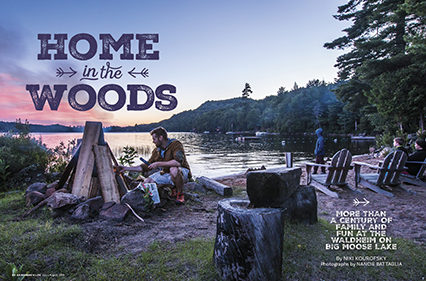
Big Moose Lake was nowhere near the path of totality for the Great American Eclipse. But the group that gathered at the Waldheim during 2017’s touchstone event surely wouldn’t have traded places with any of the milling crowds trailing from Oregon to South Carolina. They had their own natural wonder to enjoy: a sparkly August day with just the wisp of a breeze from an Adirondack lake. There was no ignoring the phenomenon that fascinated a nation, but this bunch opted to pass homemade devices from hand to hand rather than swap Instagram images in cyberspace. Along with a pair of those worth-their-weight-in-gold cardboard shades, they traded a soot-smeared piece of glass, a colander and—the crowd favorite—a Frosted Flakes cereal box conscripted as an indirect viewing contraption. It was the kind of low-tech, high-companionship moment that perfectly fits the spirit of this place.

The Closet

The Closet

When Southern public schools were segregated, Clinton, North Carolina, educated its black high schoolers at Sampson High. Sampson is closed now. But in 1957, when Fulton Fryar went there, its hard-pushing music department enjoyed an epic reputation. The school choir had performed for President Truman in the White House. It sang for the New Farmers of America national convention. Choir practice seemed perpetual—Fryar, 78, recalls needing to show up “365 days a year.” When he wasn’t singing, he was practicing his alto sax for the dance band, his clarinet for the concert band, and his trumpet for the marching band. He helmed a jazz combo, too.

But voice was the great love. Fulton Fryar had a tenor that could make you sit straight up in your chair. All the Fryars loved their music. Fryar’s father, Reverend Willy Roosevelt Fryar, a circuit rider with five churches on his watch, was steeped in the shaped-note tradition of black southern gospel, a musical notation system with roots in rural New England. Fulton Fryar’s teacher was so proud of his prize student he brought him to Rotary. Fryar dazzled the white worthies of his town with spirituals, light pop, a little Harry Belafonte. Rotary recommended him to a wealthy lady with an ear for rising local talent, and she set him up with an audition with opera buff John Seagle. That fall Seagle was in Raleigh, mentoring North Carolina’s Opera Guild. On sabbatical from Trinity College in Texas, he listened closely to this untrained prospect. In 1915, his father, Oscar Seagle, had opened a teaching colony for aspiring opera singers in the Adirondack hamlet of Schroon Lake. On Oscar’s death in 1945, John Seagle and his wife, Helen, took charge of this small colony. Said Seagle to Fulton Fryar’s friends and boosters, If you can raise the money to get this young man to the Adirondacks, we’ll take it from there.

There Goes the Neighborhood

There Goes the Neighborhood

Sheila Tavares drives slowly through the streets of her Lake Placid neighborhood, giving what for her is a grim survey. “This house on the left is the one that sleeps 24,” she says, pointing to a massive, well-appointed McMansion. “And that gray one here is a vacation rental,” she says, her ice-blue eyes peering over her car’s dashboard and through her wire-framed glasses at Hillcrest Avenue. “This one’s a vacation rental, and the house in the back is a vacation rental. Everything on the left-hand side is a short-term rental.”

On and on it goes, block by block, house to house, with Tavares pointing to each rental address as if it were a losing battlefield in a war. In the eyes of Tavares and many others in Lake Placid, that’s exactly what it is—a class war in which family homes give way to short-term rentals; middle-class homeowners succumb to rich absentee landlords; and weekend party people displace long-term, working-class renters. It’s an invasion, led by a legion of doom called Airbnb.

Ride for the River

Ride for the River

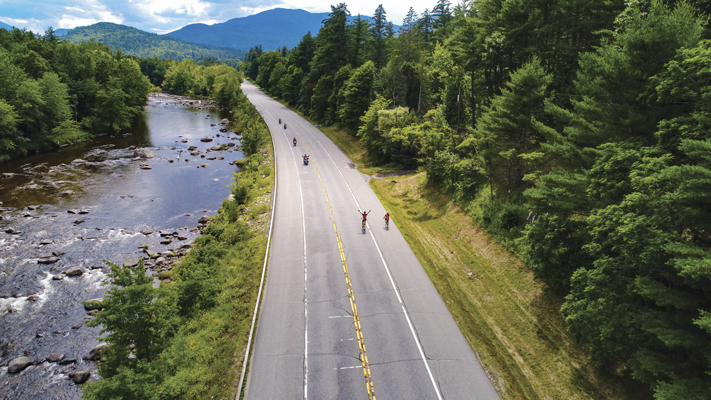
The day of Ausable River Association’s annual Ride for the River is particularly idyllic. There are clouds in the sky, but no danger of rain. It’s warm, but not too hot. Perfect biking weather. Still, as an amateur biker, I’m a little nervous when I arrive at the Hungry Trout Resort, in Wilmington.

Beautiful Boreas

Beautiful Boreas

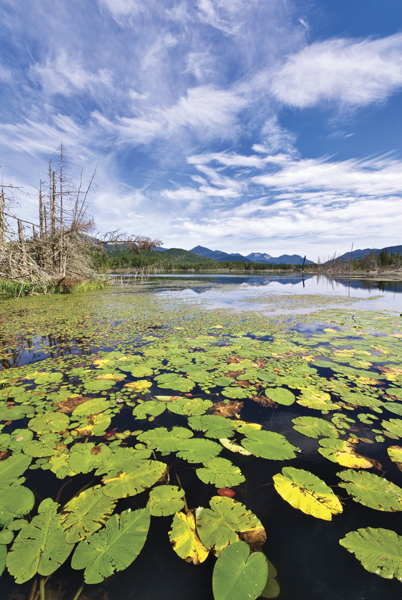
The first time I visited the Boreas Ponds, we explored the chain of lakes with Governor Andrew Cuomo paddling a canoe a short distance ahead. He seemed awed by the shimmering, densely forested shoreline and distant views of the High Peaks. “It’s magnificent,” Cuomo said. This was in 2012, when the parcel was still in private hands. “You can’t really paint this picture. Mother Nature has a better brush. It’s just exquisite.”

On Sale Now

December 2025

Pulling back the curtain on the rough-and-tumble world of backcountry guides, plus Old Forge’s beloved Strand Theatre, the life of a master woodworker, Santas on the slopes and more!

Adirondack Life Magazine

Subscribe Today!

Latest Articles

Follow Us

Adirondack Life Store

for calendars, apparel, maps and more!