April 2018

Sweet Pursuit: Maple in the Adirondacks

Sweet Pursuit: Maple in the Adirondacks

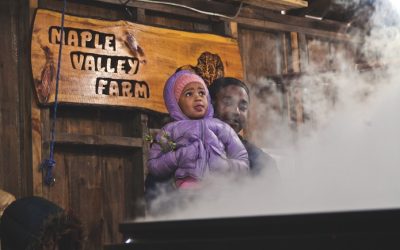
In the Adirondacks, maple is embedded in our flavor landscape. Today—from backyard taps and stove-top boiling to networks of tubing and high-tech evaporators—the process of transforming sap into syrup endures, as does our love of that sweet liquid gold.
Into Thin Ice

Into Thin Ice

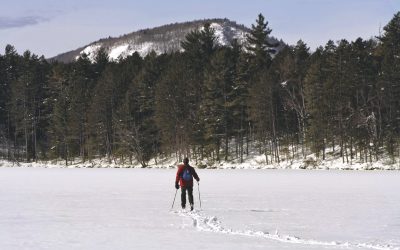
We were newbies in the Adirondacks—only here for a couple of years and, more importantly, just one winter. Tucked in our cove on Upper Saranac Lake, my husband, Michael, and I had no idea about frozen-lake adventures until one day when we saw tracks on the snow-covered ice.

Super Bowl

Super Bowl

Every weekend they stream north from the interstate, the adventurers and explorers of the Adirondacks, their vessels piled with skis and snowboards, kayaks and bikes. Off Exit 23 they’ll stand impatiently at the traffic lights in Warrensburg, and make pit stops for gas and supplies, before turning onto Route 28, full speed ahead.

Twenty miles later, at 60 miles per hour, they’ll enter the bypass that slices past North Creek. Down the long hill to the valley below, their hopes fixed on the waiting lakes and trails ahead, few will notice the two signs pointing to the Business District, or the shadowed steeples of Main Street mixed behind the maples and birches.

Fewer still might see the small entrance on the left, or the only sign marking it, a cairn of granite with a brown and blue plaque above, Ski Bowl Park. A high dune juts up against the entrance, the north edge of the Bowl, and runs along the bypass, cutting off any view of the base.

Before Gore and Whiteface, before the bypass and the interstate, the North Creek Ski Bowl was one of the preeminent ski areas in the country. By the mid-1930s, thousands were arriving every weekend, not by car, but on snow trains, the Friday overnight from Grand Central. It was the site of the first ski tow in the state, the first ski patrol in the country. And even after the war, when the snow trains stopped unloading, it was still the best town park a kid could want, with skating and toboggan slides, and an overhead lift that topped the ridge.

In 1964, when the Gore Mountain Ski Center opened on the other side of the next ridge, the business owners imagined a windfall rushing down to the village. In that first year the skiers still had to drive into North Creek and circle by the old Bowl before climbing the access road to Gore. But the bypass cut through in ’65, whisking the skiers up without a hint of the history below. It sealed the town from the summer crowds as well, slowly suffocating the small shops, restaurants and hotels.

It also laid down a 30-foot wall of asphalt between the villagers and their Bowl, suffering it a long and quiet death. By the turn of this century the lift had been torn down and the historic trails overgrown. That year the old ski hut, built by the WPA in 1936, burned to the ground. The Ski Bowl’s primary value to its townspeople was as a sand mine for the highway department, and the road that took you to the dump.

It appeared as if much of the town’s park would disappear into the six-million-acre state park surrounding her, the trails fading into the ridge, one more in a wilderness of ridges. But the best story here is how that decline has been arrested, and then reversed. You can’t see much from the bypass, but those in the know are now slowing down and making that left turn.

They’re coming to ski those trails of history, as well as some of the most challenging new terrain at Gore Mountain. And they’re coming for the new Nordic Skiing Center, which in three years has evolved from a high-school practice track to the site this March of the U16 New England Championships. When the snow melts, they’re here for the expanding network of mountain-bike trails, designed by the former ranger in these parts, Steve Ovitt, and maintained by the new nonprofit Upper Hudson Trails Alliance. The Bowl is back, a partnership of state and local resources, bound by the tireless efforts of those who never left it.

Wild Goose Chase

Wild Goose Chase

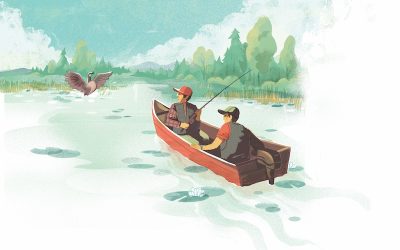
First light in camp is my favorite awakening. Zipper alarm clocks: my son R. J.’s sleeping bag, then the tent flap, twice. A yawn, a stretch, one half-open eye, breathing the morning from snuggled half-sleep. Snapping twigs, the strike of a match, a crackling fire. Coolers opening, that Coleman stove hiss. R. J. rummaging in the food bag, laying claim, no doubt, to the last powdered donut on his way down to shore. The rhythm and creak as oars splash—then silence once more. I smile. What was once me is now him. A young man alone with his thoughts, off to fish the lake’s early calm.

Time of the Tick

Time of the Tick

Late last fall I was sick in bed, so feverish my skin hurt. It wasn’t influenza, my doctor had assured me, but another respiratory virus that, with time, would run its course. I have two young kids; for several days my husband assumed all childcare responsibilities, which included some kind of daily adventure. During my sickest, I heard my phone ping. I reached for it on the bedside table and studied the photograph my husband had texted me: my kids in smiles and with walking sticks and driftwood trophies they must have found along the Ausable River. I recognized the swampy meadow and the mountain silhouette—they were downriver from the Jay covered bridge, likely following herd paths marched flat by local deer.

I felt a wave of worry.

Ticks.

Salt of the Earth

Salt of the Earth

Ask any chef the most essential weapon in their culinary arsenal and they’ll likely mention salt. Though rarely the star ingredient, it has the power to make or break a dish. 

When Andrea Lautenschuetz chose Salt of the Earth as the name of her Lake Placid restaurant,  which opened last March in a renovated house on Sentinel Avenue, it was partly in tribute to that workhorse of the spice rack. But it was also representative of the Buffalo native’s blue-collar background—her father was an electrician, her mother taught typing—and her conviction that good food shouldn’t be reserved for the elite.

On Sale Now

April 2026

The Wildlife Issue! A peek inside the secret lives of Adirondack moose by Jeff Nadler, wildlife portraits by Pamela Underhill Karaz, an opossum search party led by best-selling author Kristin Kimball, plus loons, turtles, turkeys, chipmunks, coyotes and more.


Adirondack Life Magazine

Subscribe Today!

Latest Articles

Follow Us

Adirondack Life Store

for calendars, apparel, maps and more!