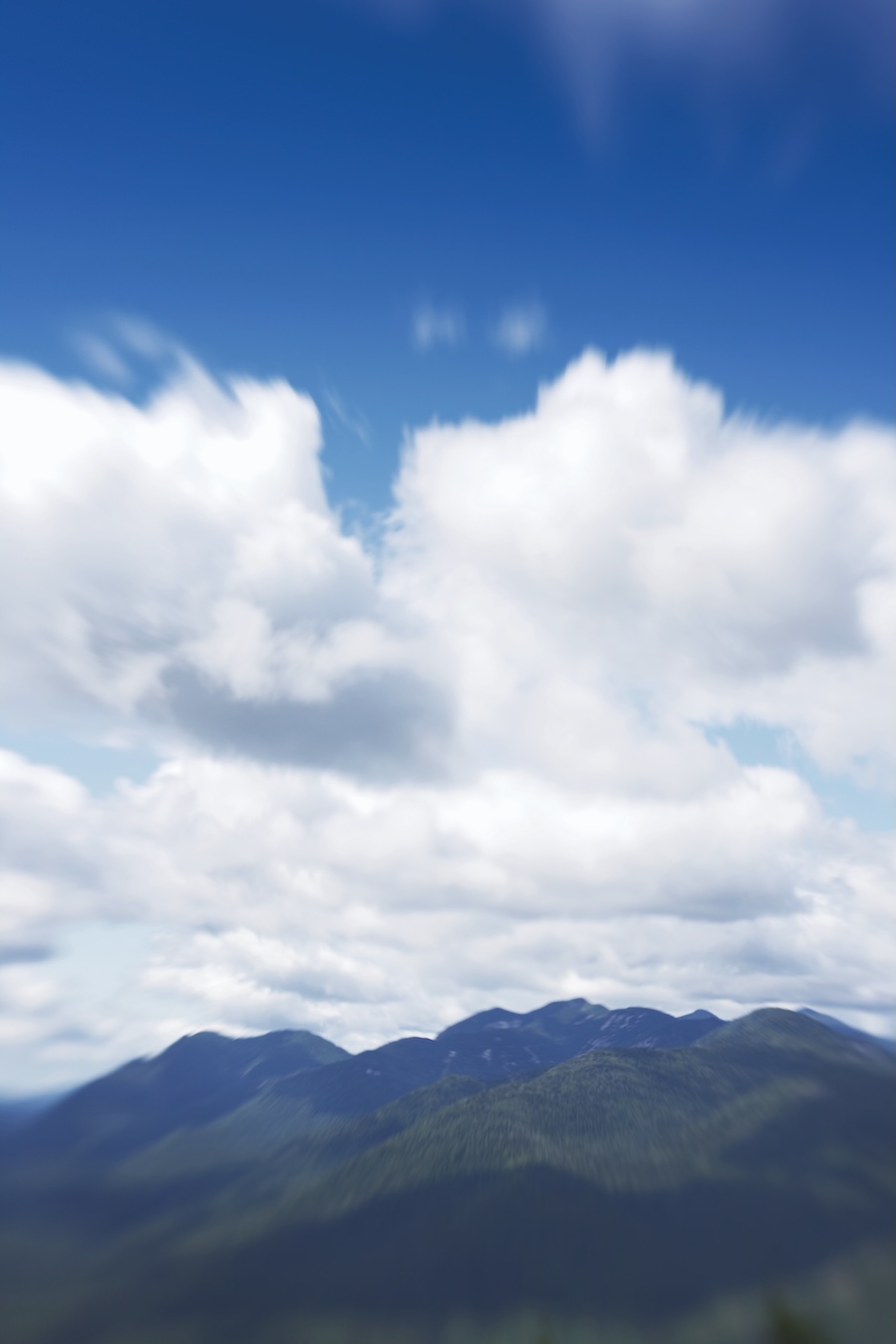
Hopkins Mountain photograph by Lisa J. Godfrey
The best years of my life have, so far, passed in a crease of the Ausable River Valley. The love of my life, our children, our friends, our trials and triumphs—it’s all happened here. Recently, after the kids were tucked in and the dog walked, my husband and I sat on our front porch, the river roaring after days of rain, the creeping night swallowing the Jay Range in the distance.
I’d just seen a series of photographs circulating on social media that zoomed into patches of Mount Marcy’s summit. In them, angular ivory pebbles appear among lichens, sand and other peak-top debris. These are human bone fragments, deposited after people’s cremains were scattered from the top of the mountain. The images prompted a conversation on the porch that night about where, someday, we’d like our physical remains to go after we die. It wasn’t the first time we’d discussed the topic.
In the deep of life, the reality of final rites can seem as distant as Cassiopeia, twinkling above. But the Adirondacks, with its Kodachrome forests and its lakes, peaks and ponds, has a way of inspiring such plans. Mountain summits, in particular, are popular places for symbolic goodbyes.
That’s because people “want to be one with the mountains,” says Adirondack Mountain Club (ADK) education director Julia Goren. “Or they like the idea of being eternally part of a peaceful place that had significance for them.”
At 5,344 feet, Mount Marcy’s summit is the highest terra firma in New York State. Getting there takes some doing. And, once on top, if you’re met with clear skies, peaks sprawling on and on, you just might consider this the closest place to heaven.
Although he’s summited Marcy 777 times, retired forest ranger Peter Fish says Baxter Mountain is where he would someday like to end up. “It’s such a dinky little thing, but it’s my favorite peak of them all,” says the 82-year-old. “I like the vegetation—the blueberries, the mountain sandwort, all the varieties of wildflowers. I like the red pine. I like the view of Johns Brook.”
Like Fish, most Adirondackers have a beloved spot. As a veteran Adirondack summit steward—and now director of the program—Julia Goren says she’s seen human cremains on just about every peak she’s climbed. While ADK “doesn’t have an official stance” on the practice, she says, “just please make sure you are standing downwind of everybody else” when releasing ash. And, “a little bit of ash and a few bone fragments are benign,” but the entire contents of an urn—as Goren once discovered on Wright Peak—is “visually obtrusive” and can “make a big impact” ecologically.
The Department of Environmental Conservation prohibits the scattering or burying of human ashes on public lands, considering it littering. And regulations for scattering ashes in national parks like Acadia and Yellowstone depend on the park, and often require a special-use permit. Regardless, what many members of online hikers’ forums express, whether they’re devoted to the Adirondacks, the Whites or the Rockies, is disdain for burial in a box on an already cramped planet. Becoming part of the landscape seems more eco-friendly—a thank-you to nature.
“My feeling,” says Goren, is that “what happens to your remains after you’re gone is really about the people who are left behind. Maybe it gives them a feeling they can be close to that person, have a tangible connection, when they visit that place. I can totally understand it.”
From my porch, Jay Mountain buffers us from the rest of the world, its ridge a place where my family and I have hiked and looked across the land we call home. Then there’s the Ausable River, a constant, in sight and sound, through our days and nights.
For now—forever. It’s a lot to think about.