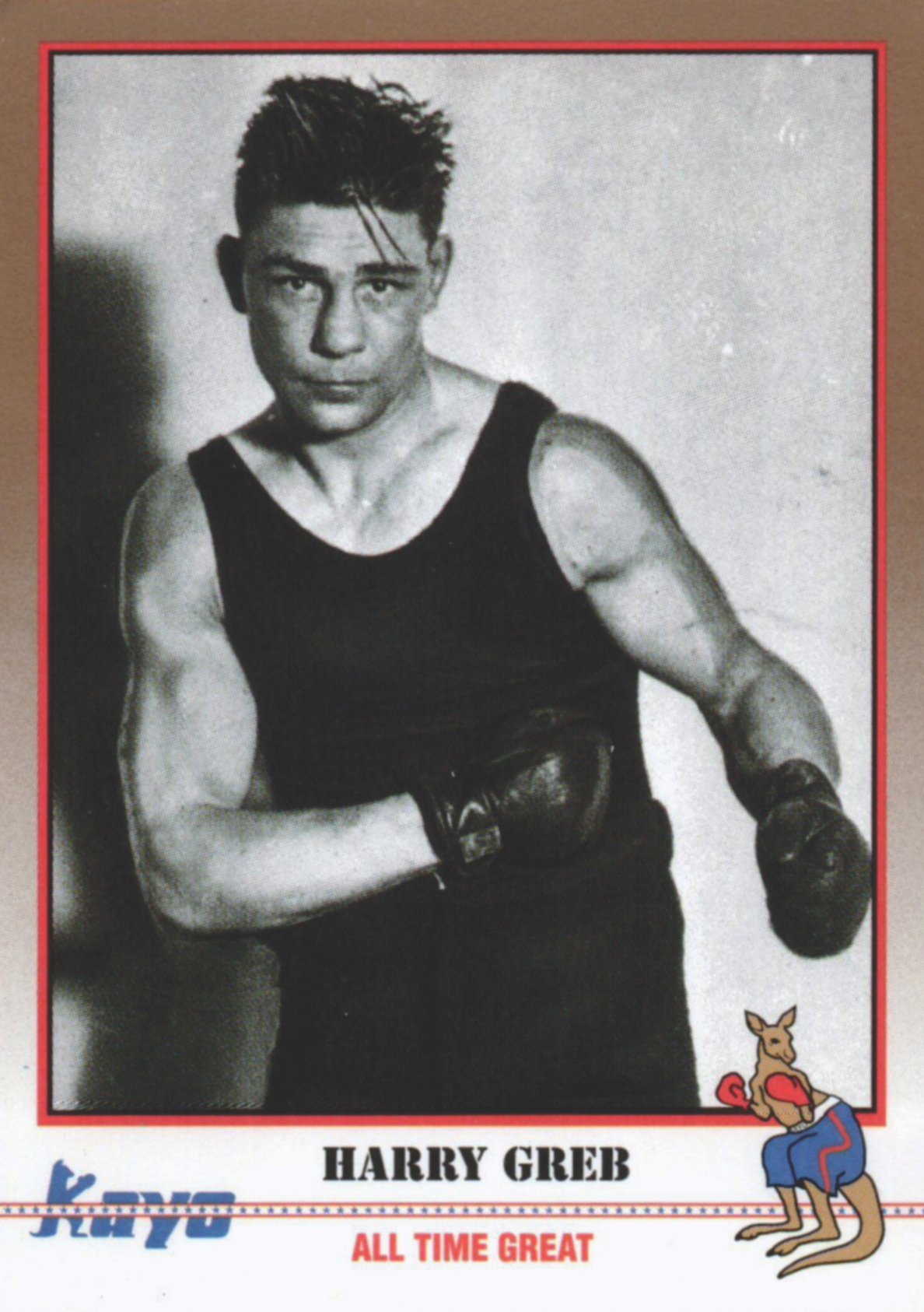
Mildred Riley Greb took up residence on Park Avenue in Saranac Lake in late 1921. Her husband, Harry, and two-year-old daughter, Dorothy, joined her there the following spring. The family spent much of the next two years at this home, known at the time as the “Walker Cottage.” The Grebs came from Pittsburgh, where Mildred’s doctor advised her to travel to the Adirondacks to do battle with the tuberculosis that had invaded her lungs.
The Grebs were one of many families in the early 20th century who sought out fresh air, rest and state-of-the-art care in Saranac Lake. The only difference between this young family and so many others was the profession of the husband and father. Harry Greb was one of the world’s greatest professional fighters. He is still regarded as among the most accomplished pound-for-pound pugilists to ever lace up a pair of boxing gloves. Every major boxing historian that has ranked the greatest fighters places Greb in at least the top five. While Mildred battled with tuberculosis, Harry, a 160-pound middleweight, ventured to New York City and defeated 175-pound Gene Tunney to win the light heavyweight championship in May 1922. Tunney would go on to defeat the seemingly unbeatable Jack Dempsey to become heavyweight champion in 1926. Greb, “The Pittsburgh Windmill,” was the only person to ever defeat Tunney, “The Fighting Marine.” “The Windmill” had the quickest hands that anyone had ever seen. One time, Greb sparred informally with Dempsey and put enough leather to the heavyweight champion’s face to cause him to call the whole thing off after two rounds.
The Tunney matchup was the first time in years that Harry didn’t have Mildred by his side for a fight. The Grebs ventured from Saranac Lake back to Pittsburgh before Harry’s title shot against the undefeated Tunney. A widely published image of Mildred listening to the fight from home, clearly worn down by her battle with consumption, appeared in newspapers around the country the day after her husband’s demolition of the world champion.
Coverage of Mildred Riley’s appearances at Greb’s fights had been common in the sporting press for several years. Ever since their relationship turned serious in 1917, Mildred sat ringside for his bouts and even came to his training sessions.
Mildred was just 17 when they met; Harry was 22. She had been working as a long-distance operator for Bell Telephone to support her large Irish-Catholic family. She’d also appeared as a chorus girl at a downtown Pittsburgh theater. Apparently, it was the stage where the onetime beauty pageant contestant caught Harry’s attention. They married in January 1919 and their daughter, Dorothy, came along later that year.
After their wedding, Mildred became a homemaker and a mother, maintaining a bungalow in Pittsburgh’s East End while Harry pursued his career. That stable life came to an end when Mildred started showing the typical signs of tuberculosis: fever, chills, rapid weight loss and a bloody cough. Harry had earned enough money in the ring to afford the best care available, leading him to bring her to Saranac Lake.
After defeating Gene Tunney, Harry returned to the Adirondacks to be with his wife and child and the family spent much of the next eight months together. This was likely the most uninterrupted time they spent together as a family. Greb had been one of the most prolific fighters in history. He fought more than 400 times in less than 15 years. In 1919, the year of his marriage and the birth of his child, Greb fought an unprecedented 45 matches. He won them all.
During Harry’s time in Saranac Lake, the boxing press talked about the possibility of a Dempsey-Greb fight as well as an offer for Greb to fight European champion Georges Carpentier, but nothing came to pass. Greb was unwilling to accept a fight unless it offered him enough money to retire and care for his wife full-time. Eventually, Greb agreed to a lucrative rematch with Tunney for the light heavyweight title on December 29, 1922. The fight was postponed due to Mildred’s worsening health and a longstanding injury to Harry’s right eye that had become infected.
While in treatment, Mildred suffered genuine distress from the numerous poison pen letters she received in the lead-up to Harry’s rematch with Gene Tunney. The Grebs made a formal complaint to the state athletic commission and Tunney himself rebuked the awful things that some of his fans had written to his opponent’s gravely ill wife.
Mildred’s condition worsened in the winter of 1922–1923. Harry considered moving her to Arizona in hopes that the dry heat would alleviate her symptoms. Instead, the family returned to Pittsburgh in February, for what proved to be Mildred’s final journey. Harry headed to New York City for the rescheduled rematch with Gene Tunney on February 23. Greb lost a controversial 15-round split decision to Tunney and dropped his light heavyweight title. The two fought on three more occasions, each time to a draw or no decision.
Harry returned home for the last weeks of Mildred’s life. She died on March 18, 1923, a few months short of her 23rd birthday. The widower relied on his sister Ida to help raise Dorothy while he continued his boxing career. Just five months after his wife’s death, Harry fulfilled his longtime aspiration and defeated Johnny Wilson to win the middleweight title. He held the championship for nearly three years. During that time, Greb came back to Saranac Lake on at least one occasion to train for an upcoming fight. In February 1926, Greb lost his title and retired soon after, at age 32. A series of injuries to his nose and right eye had led to his retirement. Unbeknownst to the public, Greb had fought for years while legally blind in his right eye. Moreover, the frequent fractures of his nose made his breathing labored.
Like his bride, Harry died tragically young. In early October 1926, he slammed his car into an embankment, his latest in a string of serious automobile crashes. He suffered another broken nose and likely had a serious concussion. The former champion complained of even greater trouble breathing, convincing his doctor that he needed nasal reconstructive surgery. After celebrating Dorothy’s seventh birthday in Pittsburgh, he traveled to Atlantic City for surgery. The procedure ruptured an unknown blood clot in his brain that killed him. Harry was buried alongside Mildred, in Pittsburgh. They now rest together in their hometown, but in their short time on earth, Harry and Mildred spent no small part of it together in Saranac Lake.